TABLE OF CONTENTS
Mosquito Management: Chemical, Biological, and Environmental Control Methods
Mosquito management involves a combination of environmental, biological, and chemical control methods to reduce mosquito populations and minimize the transmission of mosquito-borne diseases. Effective control strategies target both the larval and adult stages of mosquitoes through source reduction, biological agents, and the judicious use of insecticides.
An integrated approach remains the most effective method for long-term mosquito control and disease prevention.
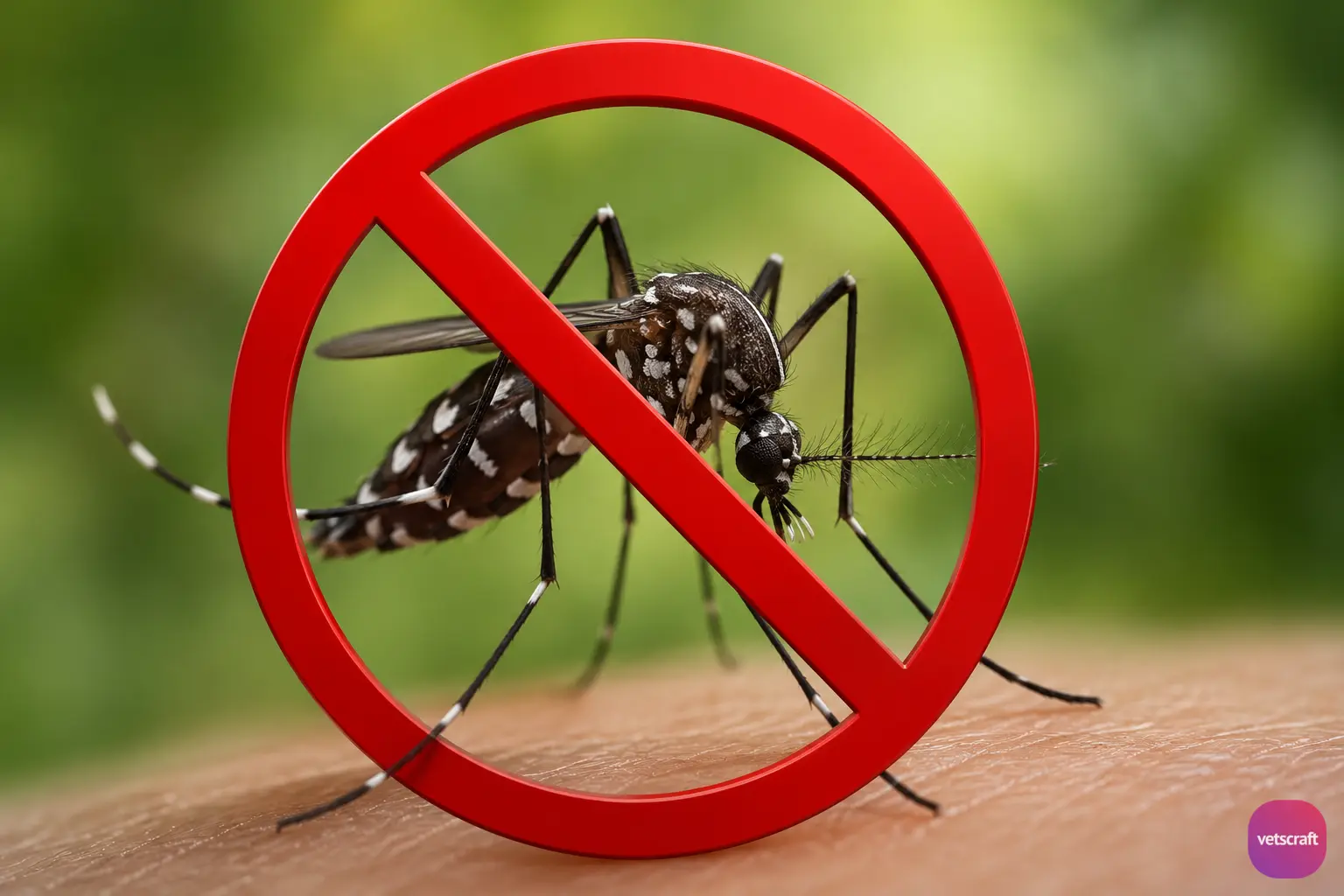
1. Protecting the Host from Mosquito Bites
By using mosquito nets and repellents (e.g., Odomos cream, Good Knight prallethrin, and insecticide sprays such as DDT and Bagon spray).
2. Elimination or Reduction of Breeding Sites
- Avoid water stagnation.
- Fill stagnant areas with sand.
- Remove weeds (vegetation) from canals and marshy areas.
- Overhead tanks should be covered with lids.
- Tree holes should be filled.
- Wells should be treated periodically with chlorine.
3. Destruction of Larvae
Traditionally, kerosene or diesel fuel has been used to kill mosquito larvae. Kerosene forms a thin layer on the water surface, preventing oxygen from reaching the larvae and causing their death (larvicidal activity). Sawdust soaked in kerosene helps maintain the oil layer on the water surface for a longer period.
- Spraying of Paris green, copper arsenate, copper sulfate, and naphthalene.
- Paris green mixed with kerosene as a carrier is an effective and safe larvicide.
- Spraying of chlorinated hydrocarbons (DDT).
- Spraying of organophosphates (Malathion).
Biological Control
- Larvivorous fish (Gambusia affinis) feed on mosquito larvae.
- Bacteria: Spores of Bacillus thuringiensis kill the larval stages of mosquitoes.
- Microsporidia (Nosema) and mermithid nematodes are also useful.
4. Destruction of Adult Mosquitoes
Adult mosquitoes can be trapped using mosquito traps.
The following insecticides are used for the control of adult mosquitoes:
- Chlorinated Hydrocarbons:
- DDT, HCH, and BHC (Lindane) at 0.25–0.3 g/m² provide protection for approximately 3 months. Dieldrin is used as a residual spray.
- Organophosphate Compounds:
- Malathion: 25% wettable powder (WP) used as an adulticide.
- Cythion: 5% dust/emulsion at 2 g/m².
- Crotoxyphos: Ciodrin 3% dust.
- Fenitrothion: 2 g/m² used as both an adulticide and larvicide.
- Carbamates: Carbaryl (Sevin) at 2 g/m² used as an adulticide.
- Pyrethrins: They produce an immediate knockdown effect and are usually combined with synergists (e.g., piperonyl butoxide). Their high activity, rapid action, and low mammalian toxicity make them suitable for use in enclosed spaces.
- Synthetic Pyrethroids: They act as contact insecticides (e.g., permethrin, cypermethrin, fenvalerate, allethrin, decamethrin or deltamethrin).
- Insect Growth Regulators: Methoprene kills the larval stages of mosquitoes.