Echidnophaga gallinacea (Sticktight Flea): Morphology, Life Cycle, Pathogenesis & Control
Echidnophaga gallinacea (sticktight flea, stick-fast flea, burrowing flea, and combless flea) is commonly found on either side of the eyelids, comb, wattles, and vent region of poultry. It may become a serious pest of poultry and may also cause irritation in cats, dogs, rabbits, rodents, horses, and humans.
This article covers the morphology, life cycle, pathogenesis, and control of Echidnophaga gallinacea.
Morphology
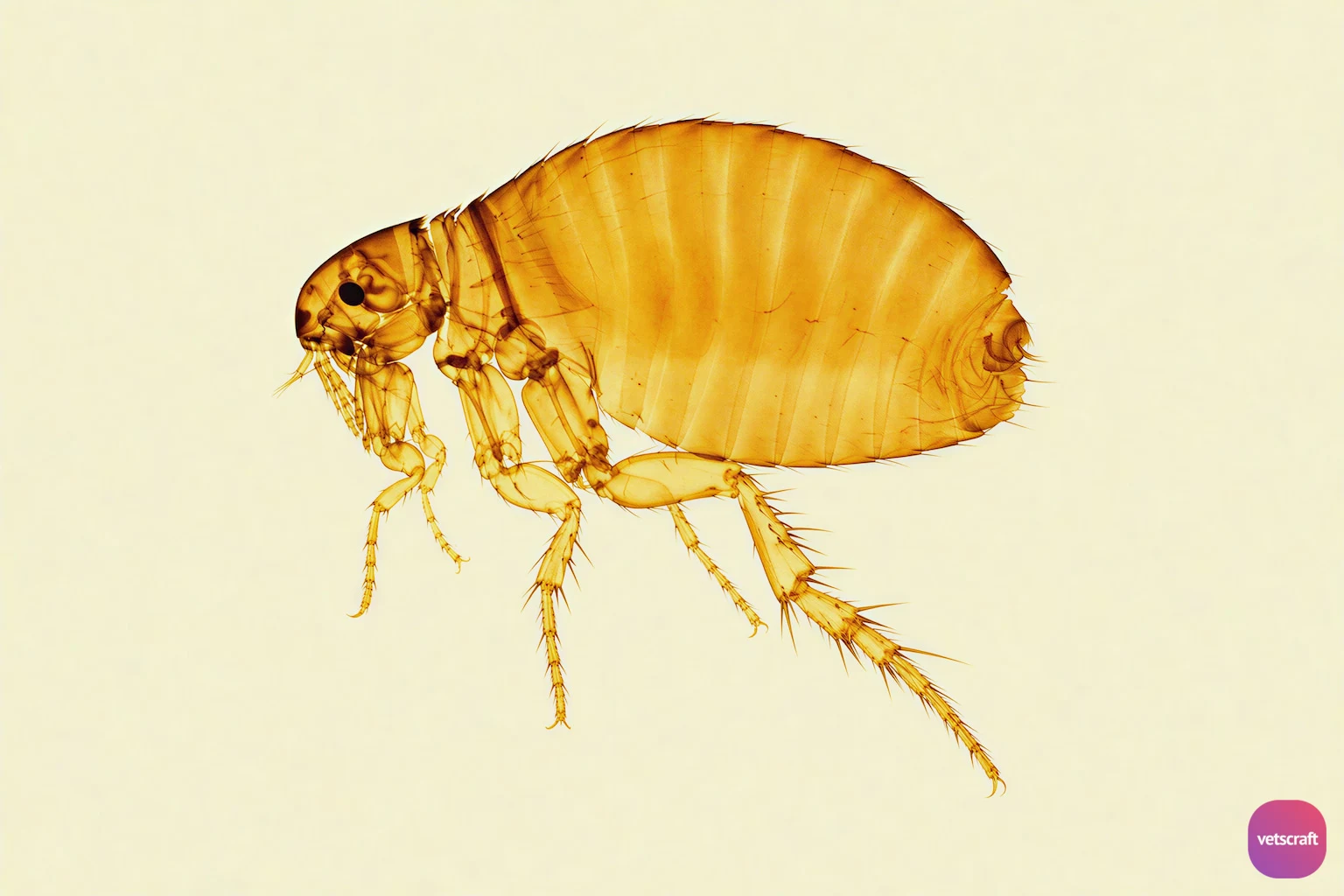
- Head has an angular frons.
- Both genal and pronotal combs are absent.
- The 3rd thoracic segment is poorly developed. The thorax is reduced, with the thoracic segments together being shorter in width than the first abdominal segment.
- Mouthparts have a pair of well-developed mandibles with serrations at the tips; with the help of these, the flea attaches tightly to the host.
- Well-developed occipital lobe with two bristles.
Life Cycle
When the Echidnophaga gallinacea flea detects a host, it becomes very active, crawls over the body, and quickly reaches the eyelids, wattles, or comb, where it attaches itself.
The female particularly attaches to the skin of the host, and after copulation, the female deposits eggs, which may fall into the poultry litter or nesting area, where they develop through three larval stages, pupate, and emerge as adults. The entire life cycle is completed in 40–60 days.
Adult → Egg → Larva → Pupa of fowl flea
Pathogenesis
Poultry may be infested with clusters of Echidnophaga gallinacea fleas around the eyes, comb, wattles, and other bare parts of the body. These fleas are difficult to remove because their heads are embedded in the host’s skin and they cannot be brushed off.
The fleas may easily infest dogs and cats that frequently come into contact with poultry. In dogs and cats, infestations with sticktight fleas are usually found around the margin of the outer ear or occasionally between the toe pads.
Due to their permanent attachment to the comb, wattles, vent, and skin, the fleas cause severe irritation, leading to the formation of ulcers and nodules in the affected areas. Fleas may be found embedded within the ulcers or nodules. The fleas lay their eggs in the ulcers or nodules. The eggs hatch there, and the larvae fall to the ground and develop into adults in approximately 4 weeks. The skin becomes swollen around the flea and encloses its body.
Ulceration around the eye may cause partial or total blindness. Blind birds may have difficulty feeding, leading to emaciation and weight loss in broilers, as well as reduced egg production. Birds may also become anemic due to blood loss.
Control
Control should target both adult fleas on the birds and the immature stages in the environment. Adult sticktight fleas can be manually removed with forceps, or exposed fleas can be treated with petroleum jelly to suffocate them. Where chemical treatment is required, topical insecticides containing permethrin or other pyrethroids can be used on poultry.
Infested litter and bedding should be removed and replaced because eggs and immature stages develop in the surrounding litter and soil. Environmental treatment can include permethrin or other pyrethroid insecticides applied to infested litter and premises.
Insect growth regulators such as methoprene can also be used to target immature flea stages. Regular inspection of the flock and limiting access of wild birds and other potential hosts to poultry areas can help prevent reinfestation.