Life Cycle of Parasites: Direct and Indirect Life Cycles
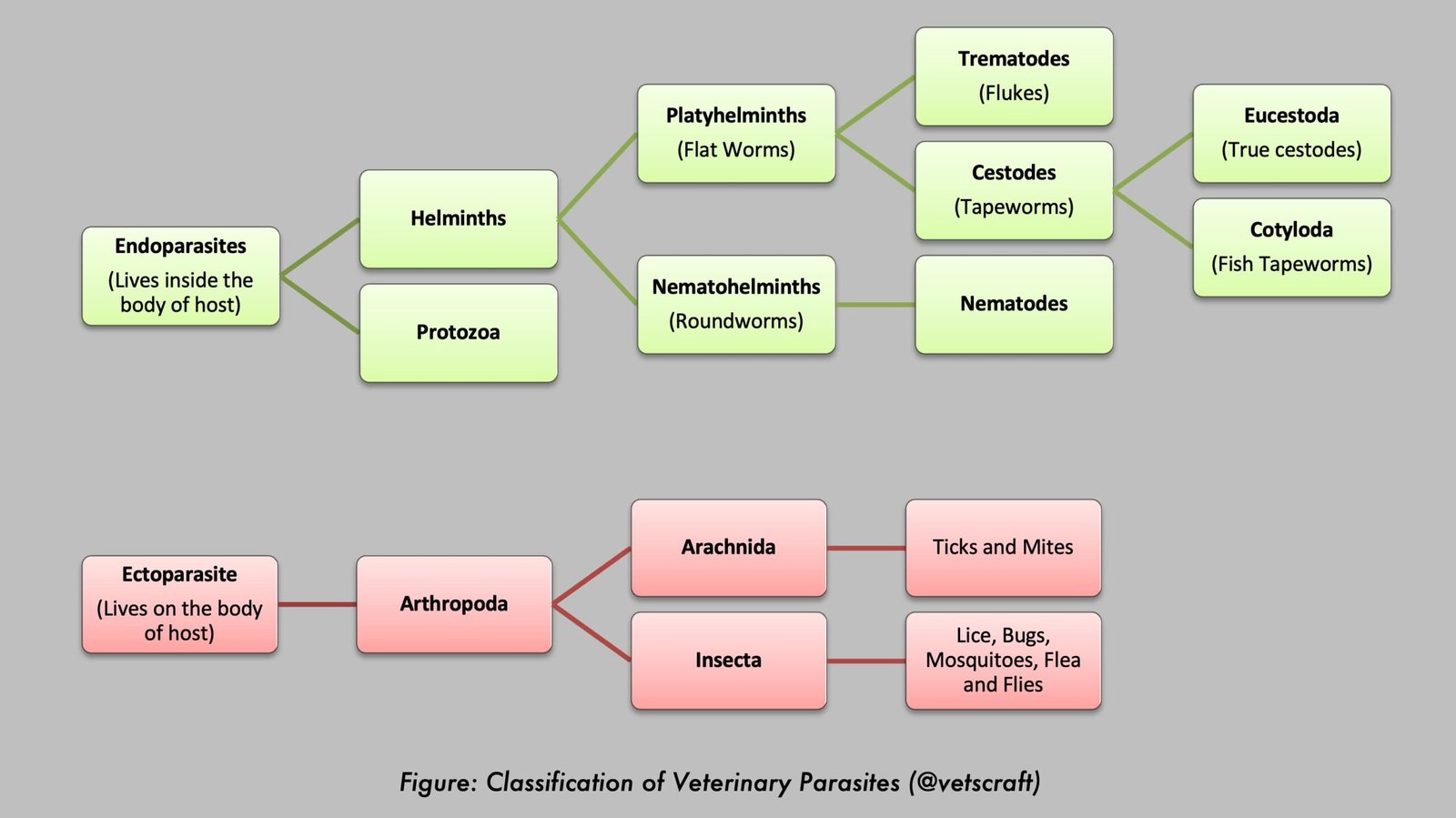
The term life cycle refers to the development of a parasite through various forms, such as egg, larva, and adult stages in helminths; egg, larva, nymph/pupa, and adult stages in arthropods; and different developmental forms in protozoa.
These include amastigotes and promastigotes in haemoflagellates; trophozoites (vegetative, actively motile stage) and cysts (resistant stage) in intestinal flagellates and ciliates; merozoites and oocysts in coccidian parasites; and sporozoites and merozoites in piroplasmids. These stages may occur in one host or in two different hosts.
Some parasites require only one host for the development of different stages and completion of their life cycle, whereas others require two hosts. Hence, based on the number of hosts required for completion of the life cycle, the life cycle pattern can be classified as direct or indirect.
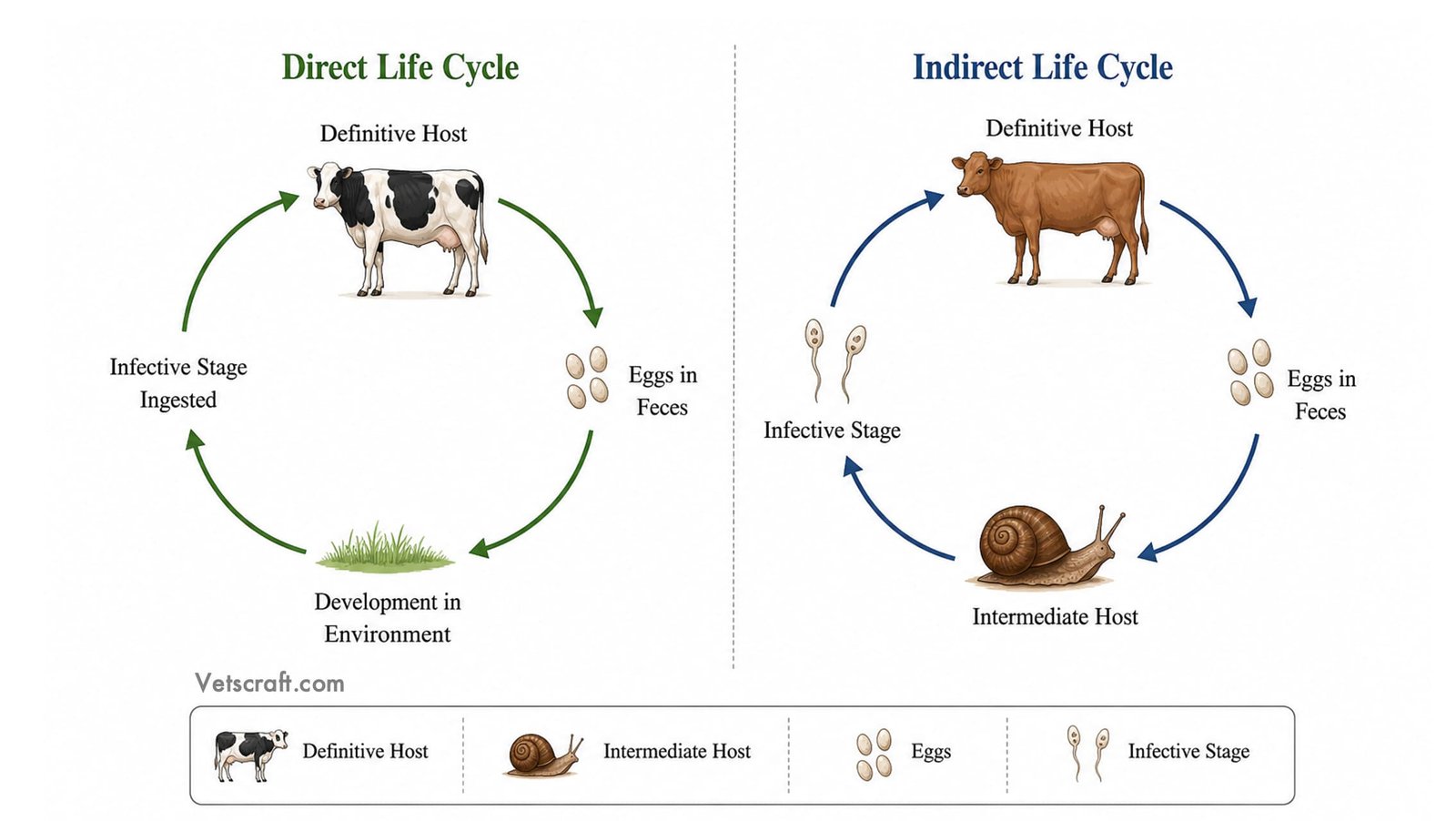
Direct Life Cycle (Monoxenous or Homoxenous)
Those parasites that have a direct life cycle are transmitted from one host to another without the involvement of an intermediate host.
The direct life cycle can be further classified as follows:
- Direct life cycle without the existence of any parasitic stage outside the host, i.e., in the environment.
Example: Tritrichomonas foetus transmission by coitus from bull to cow. - Direct life cycle with the existence of a parasitic stage outside the host, but no development occurs in the environment.
Example: Entamoeba histolytica - Direct life cycle with the existence of a stage outside the host in which some development occurs, but no free-living stage is found in the environment.
Example: Ascaris suum - Direct life cycle with the existence of a stage outside the host in which development occurs, along with free-living stages in the environment.
Example: Trichostrongyles spp.
NOTE
Definitive host: The host in which the parasite attains sexual maturity or reproduces sexually.
Intermediate host: The host that harbors the larval or asexual stages of the parasite.
Indirect Life Cycle
Those parasites that have an indirect life cycle require intermediate hosts for the development of their larval stages, and they reach the definitive host through different modes of transmission.
These include:
- Ingestion of an infected intermediate host by the definitive host.
- Ingestion of infective stages along with vegetation.
- Inoculation of infective stages into the definitive host by blood-sucking arthropods.
The indirect life cycle can be classified as follows:
- Indirect life cycle with one intermediate host.
Example: Fasciola gigantica - Indirect life cycle with two intermediate hosts.
Example: Dicrocoelium dendriticum - Autoheteroxenous life cycle — the same host acts as both the definitive and intermediate host.
Example: Humans in Taenia solium infection.
Conclusion
The life cycle of parasites may be direct or indirect depending on the number of hosts involved in development. Knowledge of these life cycle patterns is essential for understanding parasite transmission, epidemiology, diagnosis, and effective control measures in veterinary medicine.