Types of Hosts in Parasitology with Examples
A host is an organism that harbors and nourishes a parasite. Hosts play an essential role in the life cycle, survival, and transmission of parasites. Based on the developmental stage of the parasite and its biological relationship with the host, hosts are classified into different types in parasitology. The important types of hosts include definitive host, intermediate host, reservoir host, carrier host, transport host, paratenic host, and vectors.
A host is an organism that harbors and nourishes a parasite. The following are the types of parasitic hosts:
- Definitive Host
- Intermediate Host
- Reservoir Host
- Carrier Host
- Transport Host
- Paratenic Host
- Vector
Definitive Host
A definitive host is a host that harbors the sexually mature stage of a parasite. Sexual reproduction of the parasite occurs only in the definitive host. For example, cattle are the definitive hosts for liver flukes.
In malarial parasites, sexual reproduction occurs in the mosquito; therefore, the mosquito is the definitive host, whereas humans are the intermediate hosts. For this reason, in the life cycles of blood protozoan parasites, terms such as development in the vertebrate host and invertebrate host are often used to avoid confusion.
Intermediate Host
An intermediate host is a host that harbors the asexual, immature, or larval stage of a parasite. It is an essential host for parasites with an indirect life cycle. An example is the snail, which serves as the intermediate host for amphistomes.
Reservoir Host
A reservoir host is a vertebrate host that harbors the sexually mature stage of a parasite normally found in another vertebrate host species. The reservoir host serves as a source of infection for the actual definitive host.
For example, African wild game animals such as antelopes act as reservoir hosts for Trypanosoma brucei rhodesiense, which causes sleeping sickness in humans.
Carrier Host
A carrier host is a host that harbors residual parasites in a latent phase without showing any clinical signs of disease. An example is cattle serving as carrier hosts for Trypanosoma evansi.
The carrier host can be classified as:
- Contact Carrier Host
- Convalescent Carrier Host
1. Contact Carrier Host
A contact carrier host is a host that harbors parasites but never shows any clinical signs of infection because of a low level of exposure.
2. Convalescent Carrier Host
A convalescent carrier host is a host that harbors residual parasites in low numbers without showing clinical signs, even after clinical recovery following treatment.
Transport Host
A transport host is a host that harbors and transports the infective stage of a parasite from one place to another. The parasite remains viable and infective for a prolonged period without undergoing any developmental change. The transport host helps the parasite reach a suitable definitive host. An example is the earthworm, which acts as a transport host for Ascaridia galli.
Paratenic Host
A paratenic host is a host that harbors the larval stage of a parasite in an encapsulated or encysted form for a prolonged period. These encapsulated larval forms remain viable and infective to the definitive host. Examples include garden lizards and chickens, which act as paratenic hosts for Spirocerca lupi.
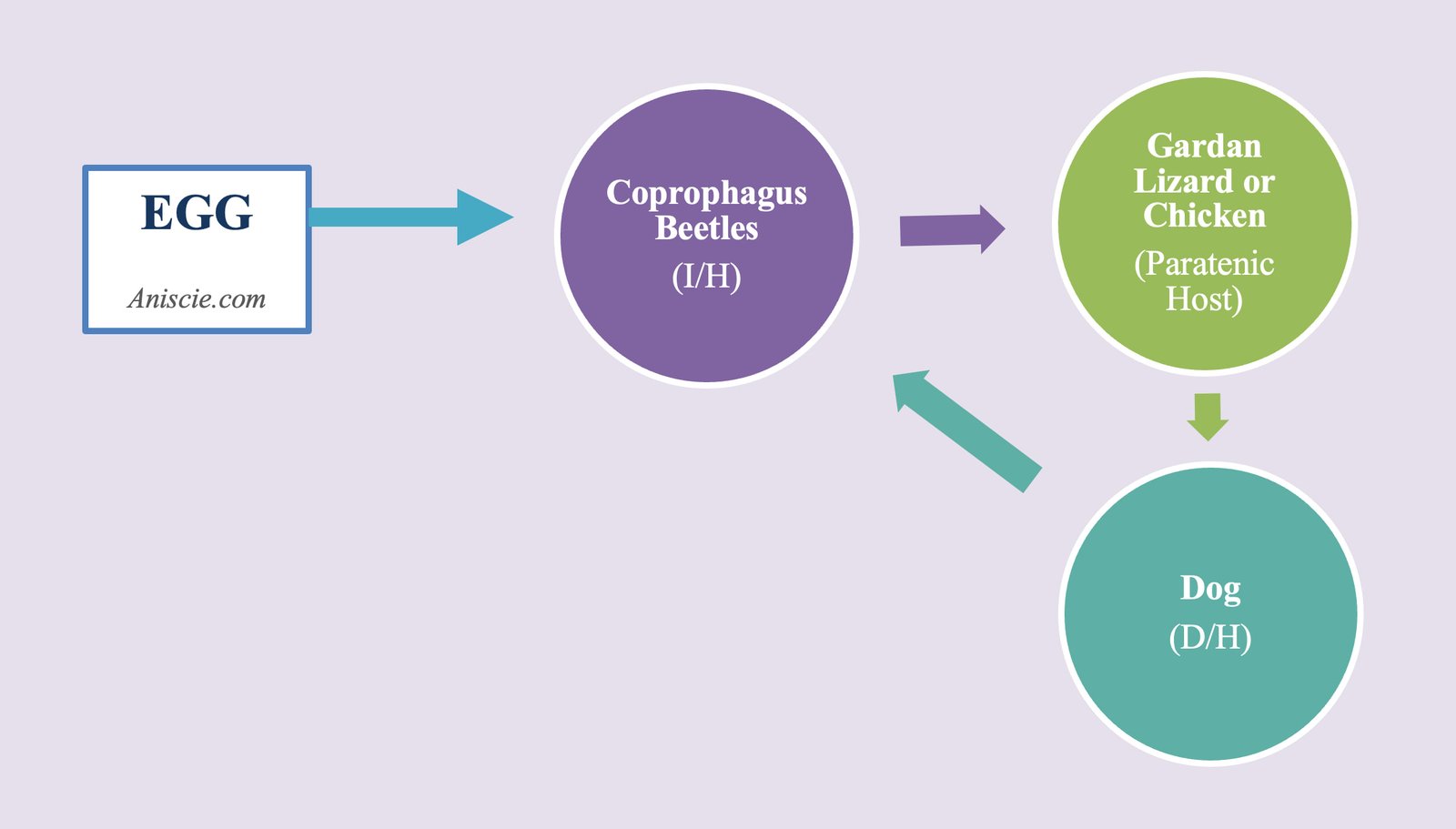
In the life cycle of S. lupi, the definitive host becomes infected either by ingesting an infected beetle (intermediate host) or a paratenic host. Although the paratenic host is not essential for completion of the parasite’s life cycle, it helps the parasite reach the definitive host by acting as a bridge between the intermediate host and the definitive host. This occurs because dogs may not consume beetles directly, but they may eat garden lizards or chicken offal containing the infective larvae.
Vector
A vector is an invertebrate host, especially an arthropod, that transmits infective agents from one vertebrate host to another vertebrate host.
Based on the development of the parasite within the vector, vectors are classified into two types:
- Mechanical Vector
- Cyclical or Biological Vector
1. Mechanical Vector
A mechanical vector is a vector in which the infective agent (pathogen or parasite) does not undergo any developmental changes before being transmitted to a new host. This mode of transmission is known as mechanical transmission. An example is the Tabanus fly transmitting Trypanosoma evansi.
2. Cyclical or Biological Vector
A cyclical or biological vector is a vector in which the infective agent (pathogen or parasite) undergoes developmental changes before being transmitted to a new host. This mode of transmission is known as cyclical transmission. An example is the Glossina fly transmitting Trypanosoma species.