
Distal Sesamoid of Forelimb
Veterinary AnatomyThe distal sesamoid of the forelimb is a small, nodular bone located behind the distal interphalangeal joint (commonly the coffin joint in large animals).

The distal sesamoid of the forelimb is a small, nodular bone located behind the distal interphalangeal joint (commonly the coffin joint in large animals).
Proximal sesamoids of the forelimbs are small, nodular bones located at the back (palmar side) of the metacarpophalangeal joints (commonly known as the fetlock joint in large animals).

Phalanges of the forelimb in animals refer to the series of small long bones forming the digits (fingers or toes) of the forelimb. In domestic animals like ox, horse, dog, pig, rabbit, and fowl, these bones are arranged typically in three segments—proximal (first), middle (second), and distal (third) phalanges.

Digits of the forelimb are the distal segments of the forelimb, commonly referred to as fingers or toes in animals. Each digit is typically composed of small bones called phalanges.

The metacarpal bones are a group of long bones located in the forelimb (front limb) of animals, situated between the carpal bones (wrist region) and the phalanges (bones of the digits or toes).
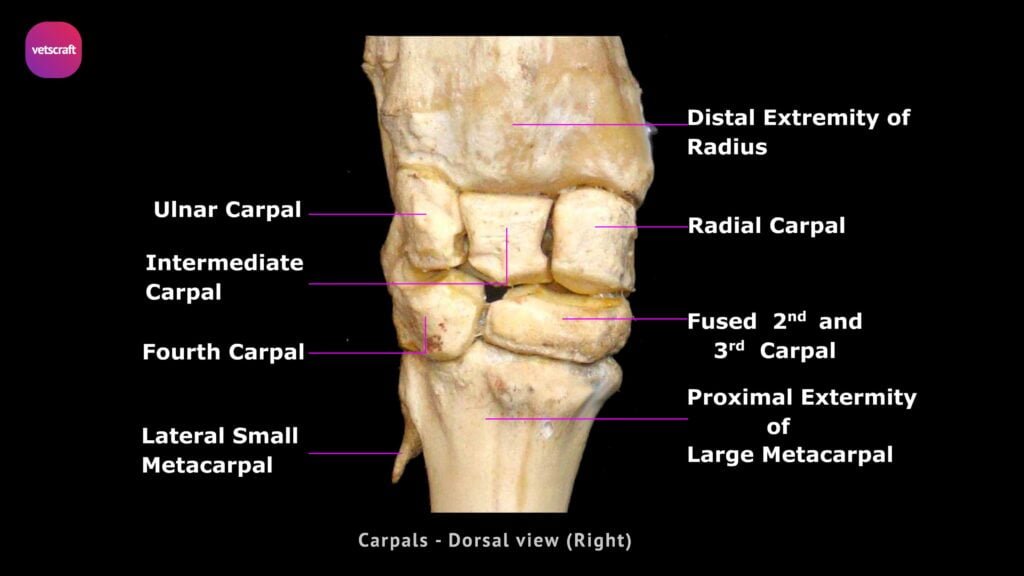
The carpal bones in animals form the knee joint (in quadrupeds) and connect the forearm (radius and ulna) to the metacarpus.
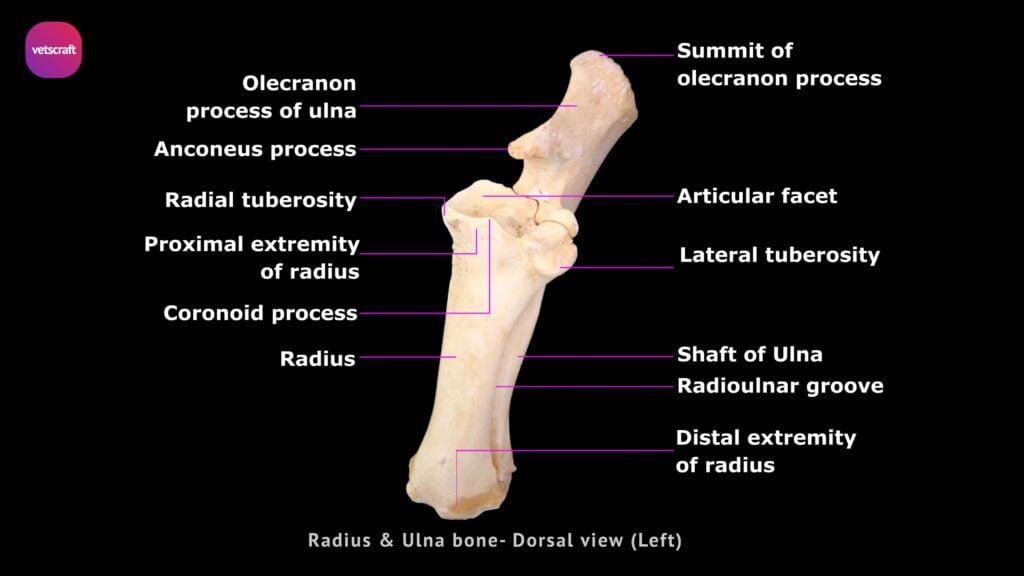
The ulna is a long bone of the forelimb found in most domestic animals. It lies along the posterolateral aspect of the radius and, together with the radius, forms the bones of the antebrachium (forearm).
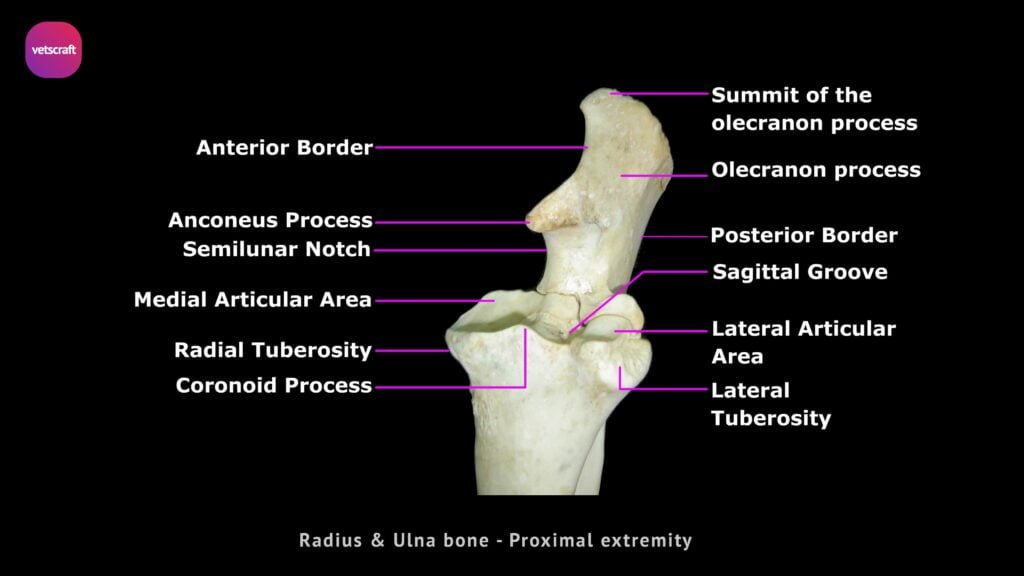
The radius bone of animals is the larger and shorter of the two bones that make up the forearm, the other being the ulna. It is a long bone positioned obliquely downward, extending from the elbow joint above to the carpal (wrist) joint below.
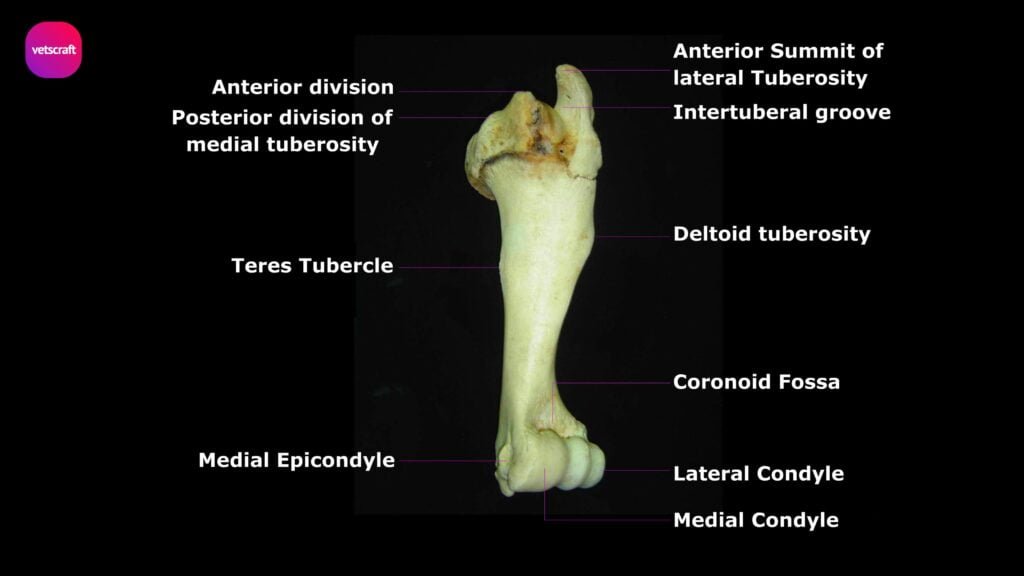
The humerus is a long bone located in the forelimb of animals. It extends obliquely downward and backward between the shoulder joint (proximally) and the elbow joint (distally).
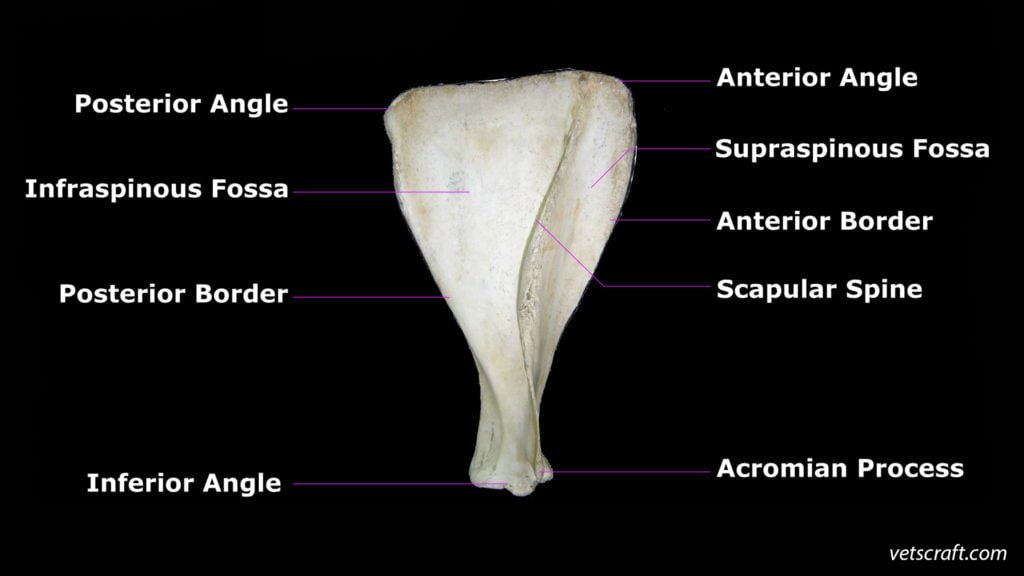
The scapula bone, also known as the shoulder blade, is a flat, triangular bone located on the lateral side of the thorax in domestic animals.