
Temporal Bone
Veterinary AnatomyThe temporal bone forms part of the lateral wall of the cranium and consists of squamous and petrous parts. It varies in form across domestic animals such as ox, horse, dog, and fowl.
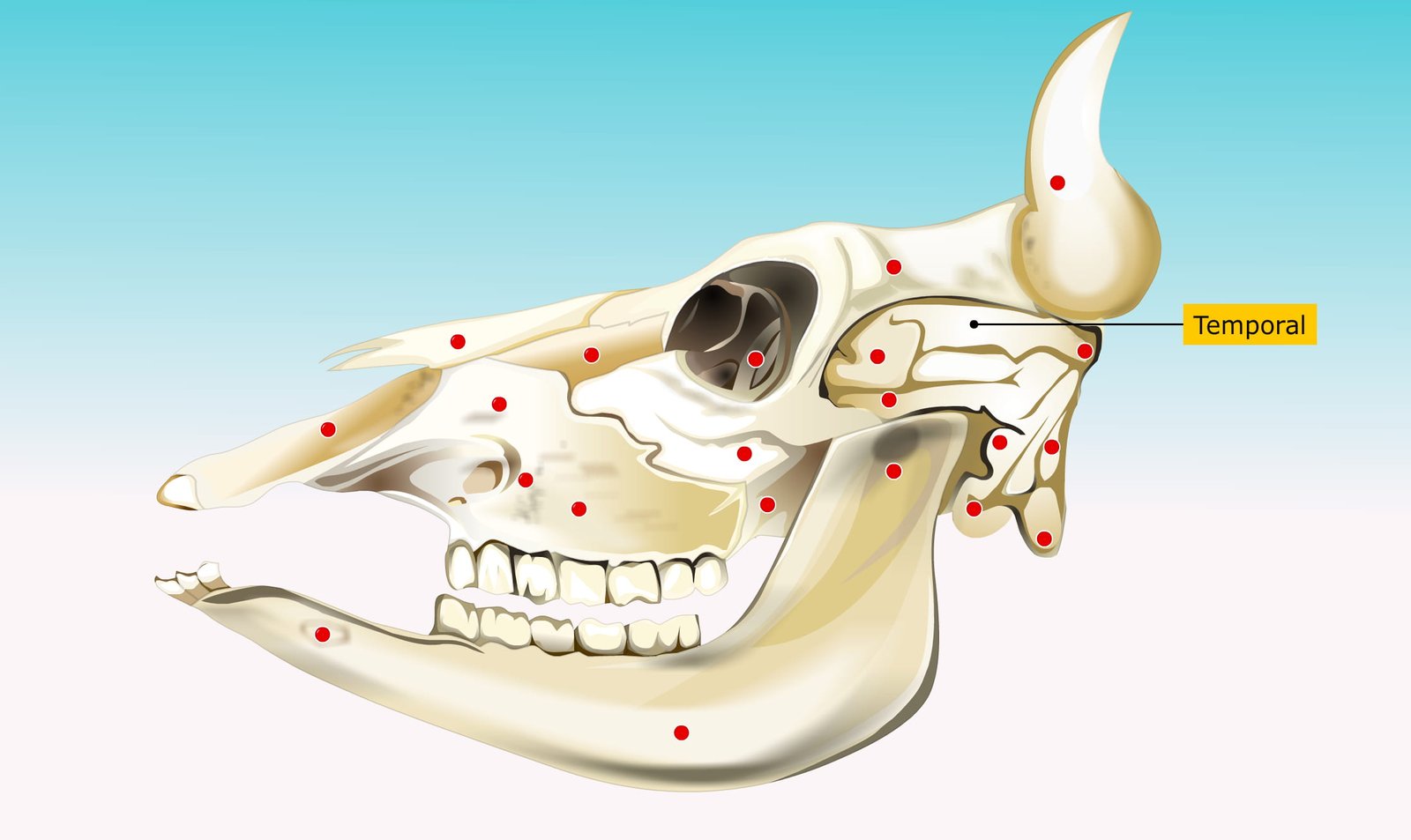
The temporal bone forms part of the lateral wall of the cranium and consists of squamous and petrous parts. It varies in form across domestic animals such as ox, horse, dog, and fowl.
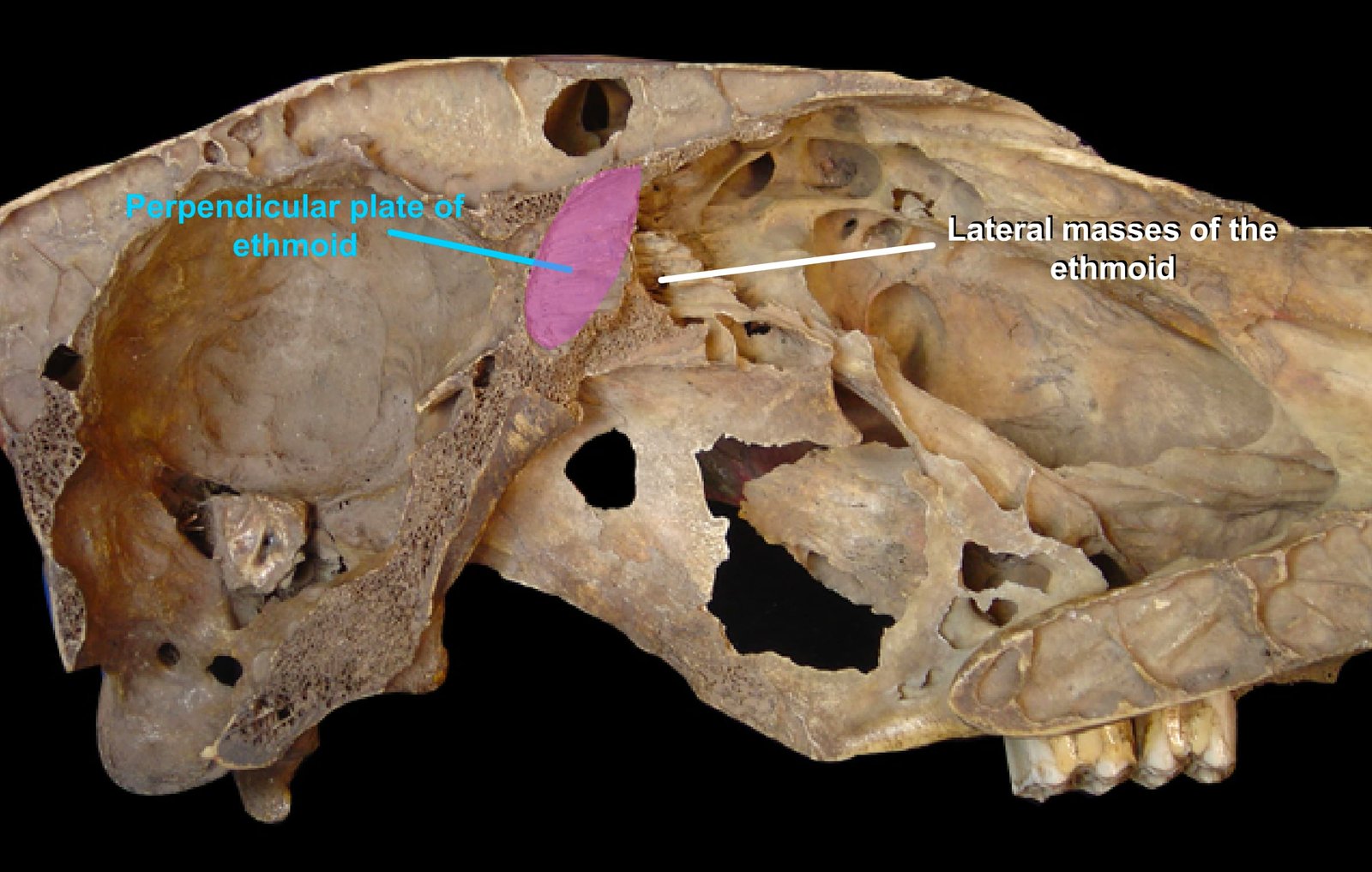
The ethmoid bone in domestic animals such as ox, horse, dog, and fowl plays a vital role in separating the cranial and nasal cavities. It is a single, sieve-like bone composed of the cribriform plate, perpendicular plate, and paired lateral masses.
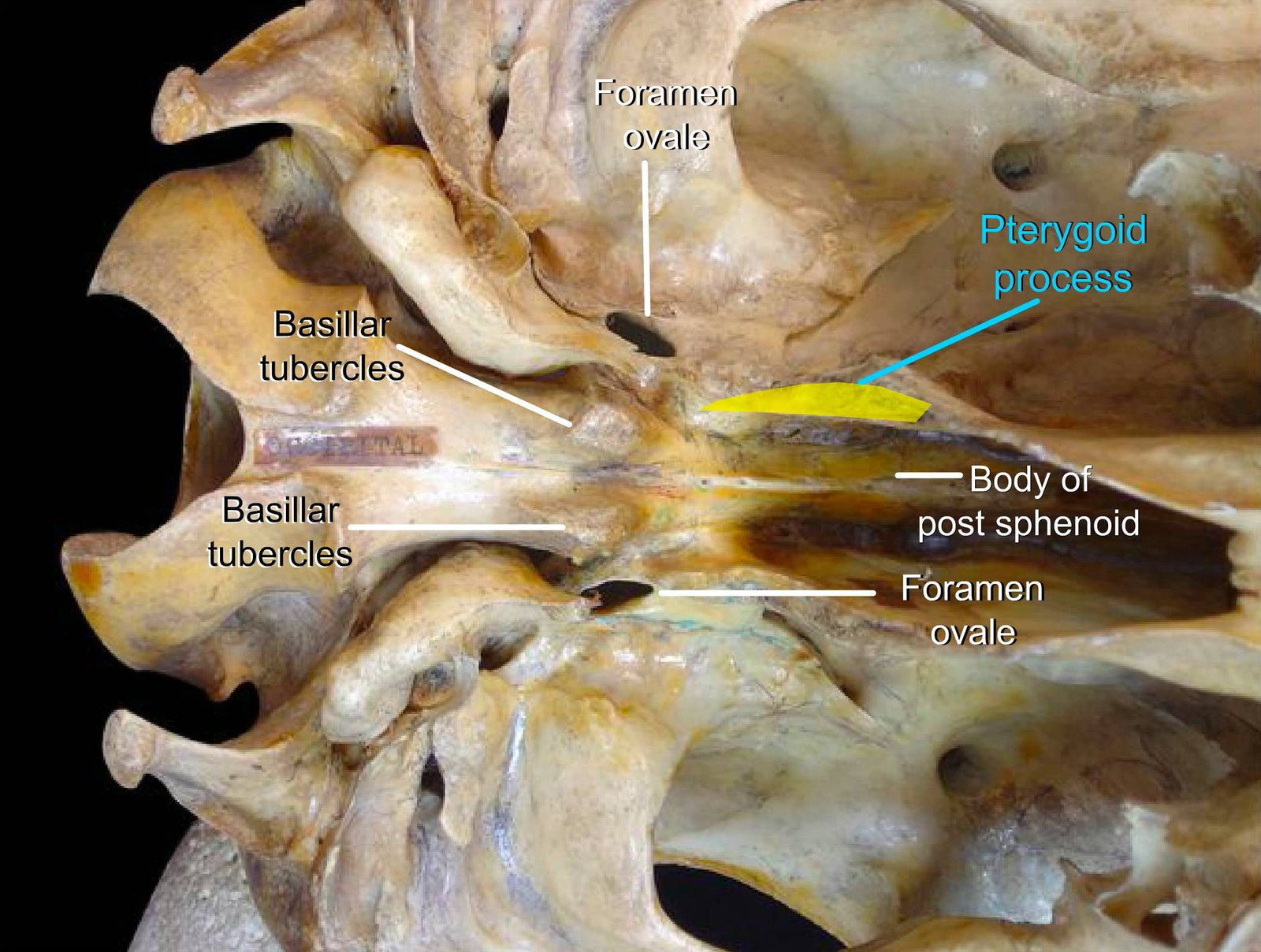
The sphenoid bone is a complex, unpaired bone located at the base of the skull in domestic animals. It plays a vital role in forming the floor of the cranial cavity and provides passage for important cranial nerves and blood vessels.
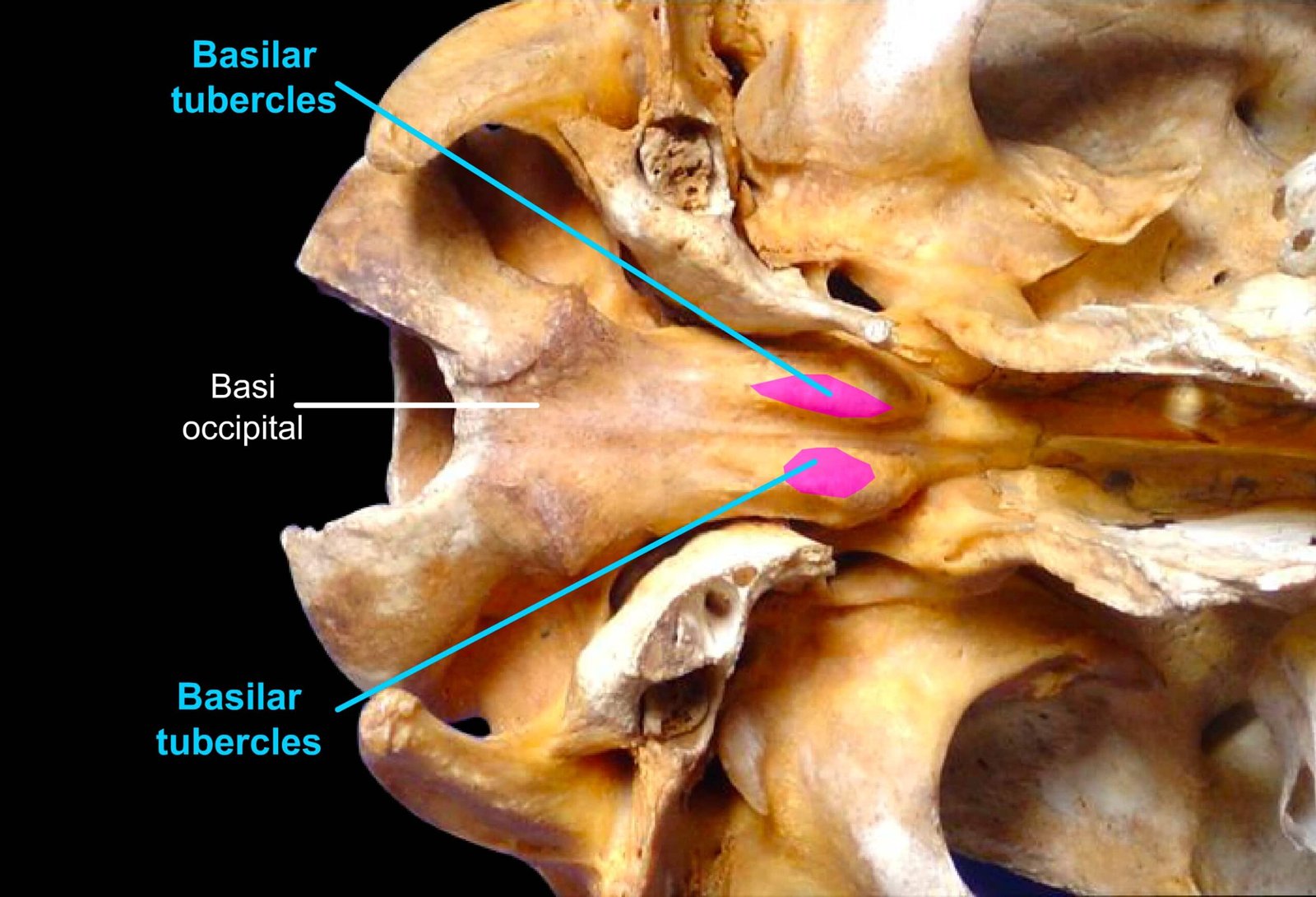
The occipital bone forms the caudal part of the skull in domestic animals and plays a crucial role in protecting the brain and forming joints with the vertebral column. It consists of several parts that vary among species like ox, horse, dog, and fowl.
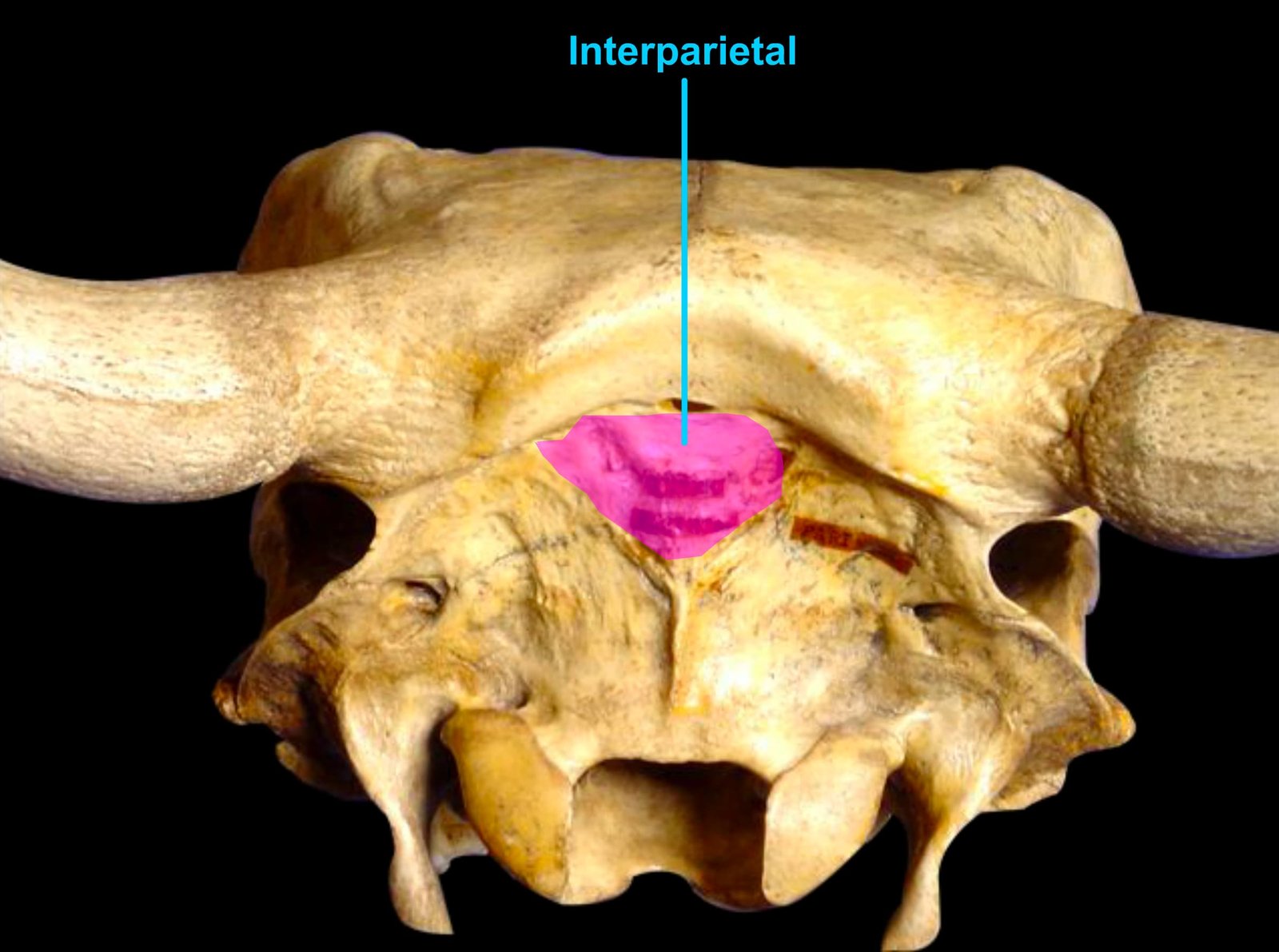
The interparietal bone is a small cranial bone located in the upper back portion of the skull. Its structure, presence, and fusion vary among domestic animals, making it important in veterinary comparative anatomy and skull morphology studies.
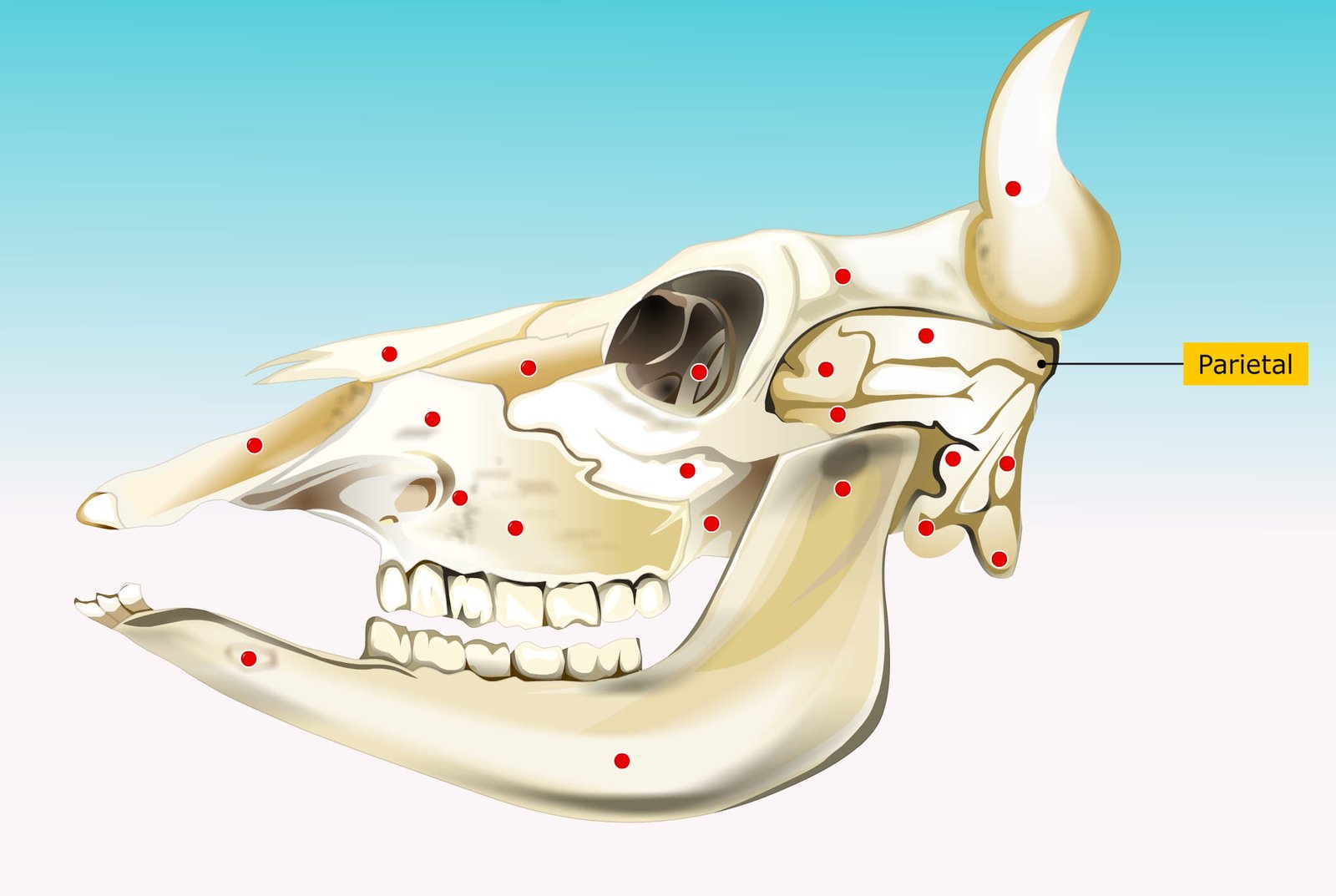
The parietal bone is a paired, flat bone located on the dorsolateral aspect of the skull in domestic animals. It contributes to the formation of the cranial cavity, enclosing and protecting the brain.
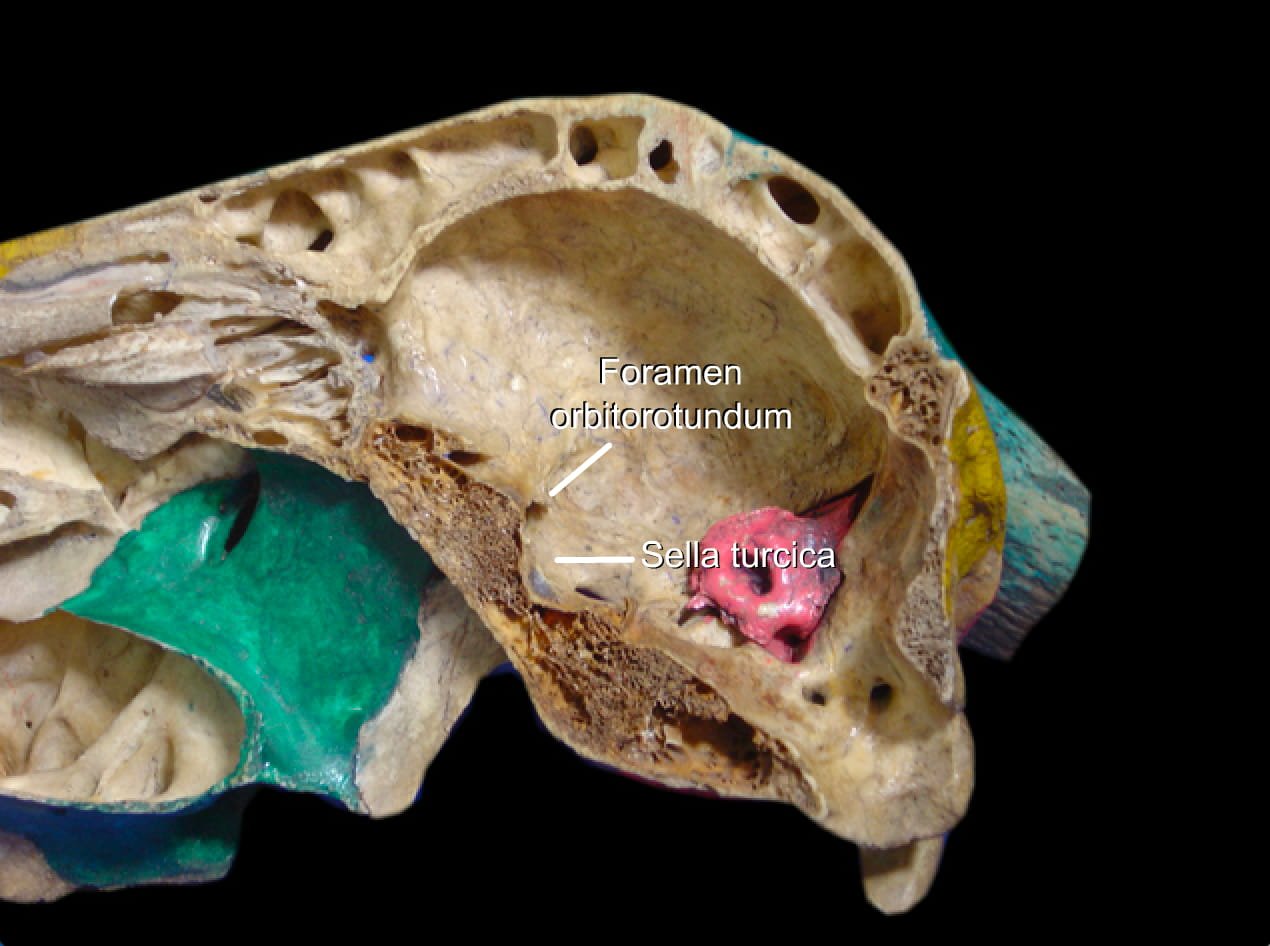
The cranial bones form the cranial cavity, which lodges the brain along with its meninges, vessels, and the essential organs of hearing.
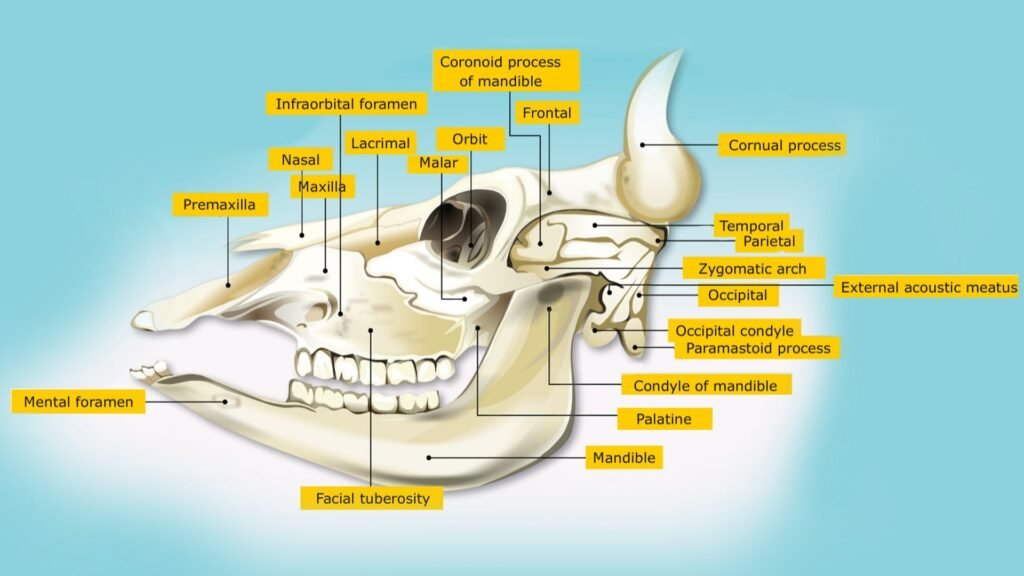
The bones of the skull are divided into cranial and facial groups. The cranial bones form the cranium, which houses the brain and essential organs of hearing, while the facial bones form the boundaries of the oral and nasal cavities and also support the pharynx, larynx, and tongue.

The thorax, also known as the thoracic cavity, is a vital anatomical region in domestic animals that houses major organs such as the heart, lungs, and parts of the esophagus and trachea.

The sternum of domestic animals is a medially placed, segmented bone that forms the ventral (floor) boundary of the thoracic cavity. It is made up of seven bony segments, called sternebrae, and is elongated from front to back.